What Do Web Design Agency Services Actually Include?
A clear breakdown of what's actually inside a web design agency's scope, what's usually an add-on, and what rarely is.
📆

Web design agency services typically cover four things: the design itself, the technical build, a working technical foundation (speed, structure, mobile behavior), and some level of content and SEO setup. What varies a lot from agency to agency is exactly where each of those stops, and what gets billed as an extra. Knowing the shape of it before you're in a sales call means you can actually compare quotes instead of just comparing prices.
Design and UX
This is the part every agency includes, though depth varies widely:
Wireframes: the basic structure and layout logic before any visual design happens
Mockups: the actual visual design, colors, typography, imagery, applied to key pages
Responsive design: how the site adapts across desktop, tablet, and mobile, not just a shrunk-down version of the desktop layout
A component or design system: reusable buttons, headers, and layout blocks so the site stays visually consistent as it grows
Cheaper packages often mean fewer unique page designs, with everything past the homepage and a couple of key templates built from repeating patterns. That's not necessarily a bad thing for a smaller site; it's just worth knowing upfront which pages actually get custom design attention and which ones are variations on a shared template.
Development and Build
This is where the design becomes an actual, working website:
Front-end build: turning the approved design into real, functioning code
CMS setup: WordPress, Webflow, Shopify, or a custom system, so your team can update content without needing a developer for every change
Custom functionality: anything beyond a standard page, booking systems, calculators, membership areas, gets scoped and often priced separately
Basic integrations: connecting forms to your CRM or email tool, adding analytics, setting up payment processing if needed
The custom-vs-template question matters more here than most buyers realize going in. A fully custom build gives you more flexibility later and no platform constraints, but costs more upfront and takes longer to launch. A strong CMS-based build on a platform like Webflow can look just as sharp for a fraction of the cost, with the tradeoff being less flexibility for unusual functionality down the line. Neither option is objectively better. It depends on how unusual your functionality needs actually are, and most businesses overestimate how unusual theirs are.
The Technical Foundation Most Buyers Forget to Ask About
A site can look great and still perform badly, and this is the part that actually affects whether people stay on it. Google's own Core Web Vitals case studies show real, measurable business impact from getting this right: Vodafone Italy improved page load speed by 31% and saw an 8% increase in sales, while Redbus saw mobile conversion rates jump 80 to 100% after fixing load time and layout stability issues. This isn't a nice-to-have technical detail. It's directly tied to whether visitors convert.
Ask specifically whether page speed, mobile performance, and basic accessibility are part of the build or a separate line item. Plenty of agencies quote a beautiful design without mentioning that a slow, unoptimized build will undercut the results of that design, sometimes badly enough to erase whatever conversion lift the new design was supposed to deliver in the first place.
Content and SEO Basics
This is the most inconsistent part of any web design agency's scope. Some include:
Copywriting for key pages, though many treat this as an add-on or expect you to supply the words
On-page SEO setup: meta titles, descriptions, header structure, and basic keyword targeting on core pages
Site structure and internal linking logic built with search visibility in mind, not just visual navigation
Full-scale SEO strategy, ongoing content production, and link building are rarely included in a standard web design package. If SEO growth is a real goal, expect that to be a separate, ongoing engagement rather than something bundled into the build.
What's Usually Not Included
Worth confirming upfront, since these are the most common gaps between what buyers expect and what a quote actually covers: ongoing hosting and maintenance after launch, content updates beyond the initial build, paid advertising or ongoing SEO work, and stock photography or custom illustration licensing (sometimes billed separately from the design work itself).
Getting this scope question right before you sign anything is exactly why a clear brief matters. A well-written brief forces both sides to agree on scope upfront, which is the single easiest way to avoid a mid-project argument about what was supposed to be included. If you're ready to compare agencies directly, our web design specialization page lists studios pulled from Find Design Agency's index of 500+ vetted agencies, curated by designers for founders and filtered by budget, location, and past client type.
Find Design Agency
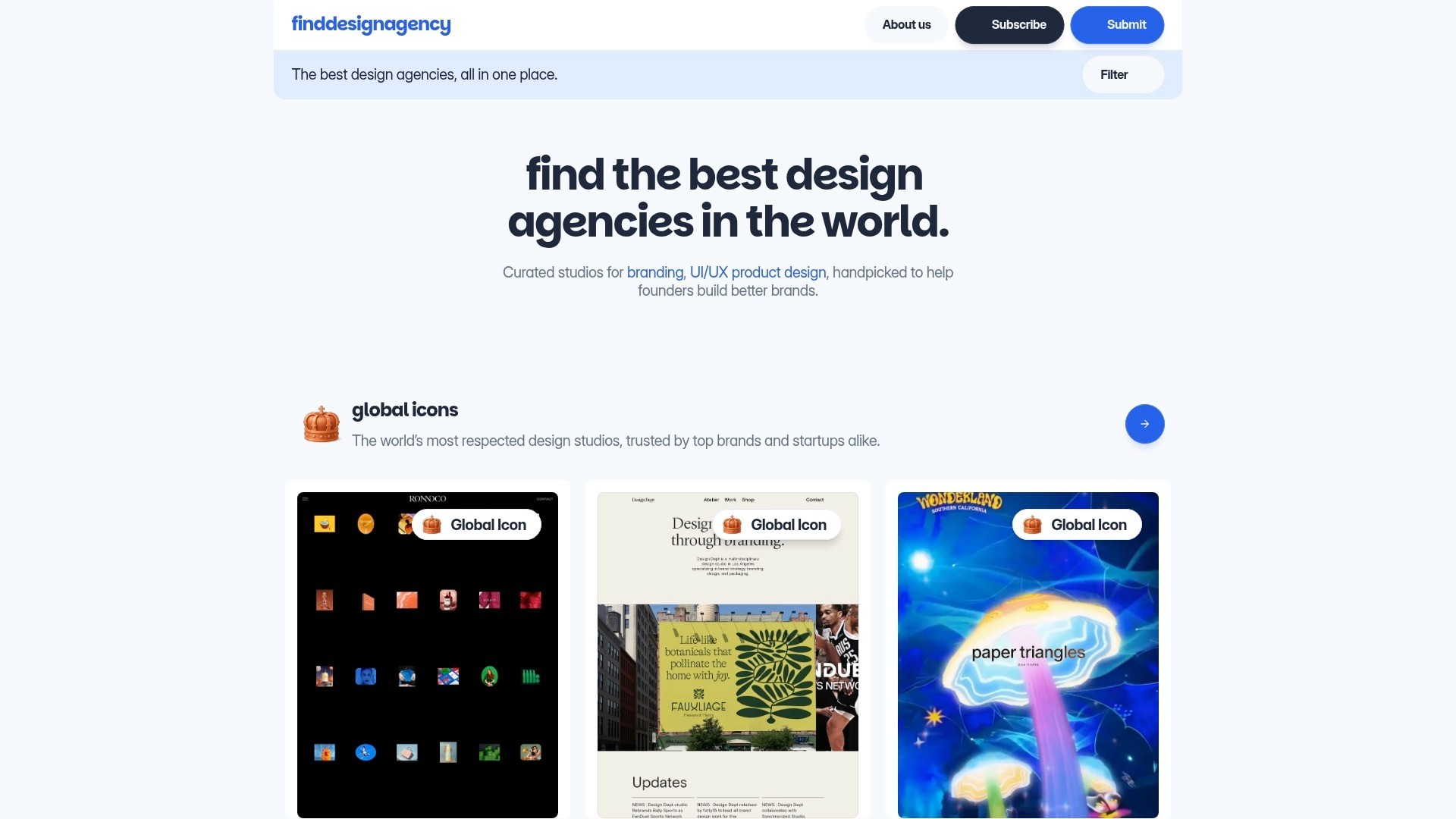
Find Design Agency is a hand-curated directory of studios vetted for exactly this kind of process discipline, not just polished portfolios. Every studio listed is reviewed for strategic depth, and you can filter by specialization, including motion graphics and branding, to find a partner built for the kind of project you're running. Start your search on Find Design Agency and ask every agency you're considering to walk you through their version of these five steps before you sign anything.
Frequently Asked Questions
Does web design include SEO?
Usually only the basics: meta tags, header structure, and a search-friendly site structure. Ongoing SEO strategy, content production, and link building are almost always a separate service, not part of a standard web design package, so don't assume ranking growth is included just because a proposal mentions "SEO-friendly."
Does web design include hosting and maintenance?
Rarely as a permanent inclusion. Most agencies either hand off a finished site for you to host yourself, or offer maintenance and hosting as a separate monthly retainer after launch. Ask what happens the day after launch before you sign anything, since that gap catches a lot of buyers off guard.
What's the difference between a template-based site and a custom build?
A template or CMS-based build (Webflow, WordPress) uses existing structural components, which is faster and cheaper but has some functionality limits. A fully custom build is coded from scratch, giving more flexibility for unusual features at a higher cost and longer timeline. Most small and mid-sized business sites don't actually need a fully custom build.

More articles you might find useful
Load More


Load More