Master the Creative Direction Process for Design Teams
Learn the creative direction process step by step to elevate team collaboration, boost originality, and achieve successful project outcomes efficiently.
📆

Creative direction falls apart the same way almost every time: bold ideas, no shared purpose, and a team pulling in five directions by week two. A strong project vision isn't a formality you write once and file away. It's the anchor that keeps every creative decision, yours and your design partner's, pointed at the same outcome.
This guide walks through the five-step process that separates founders who get great creative work from founders who get expensive guesswork. If you're evaluating a design agency right now, these are the exact things a strong partner should already be doing well. If they're not, that's worth knowing before you sign anything.
Step 1: Define your project vision and objectives
Your project vision is the foundation everything else gets built on, and skipping it is the single most common reason creative projects drift off course. Before any agency touches a design file, you need a clear, concise statement of what you're creating and why it matters.
Gather your core stakeholders and answer two questions honestly: what fundamental change are you trying to create, and what unique value will the design bring to your users or your business? Your vision statement should run one to three sentences. Short enough to remember, specific enough to guide a real decision when your designer asks "does this fit?"
A vision statement that connects your immediate project to your company's broader goals gives your creative partner something to check every decision against, not just a mood to aim for.
Pro Tip: Revisit your vision statement every quarter if the engagement runs that long. Priorities shift, and a stale vision statement quietly misdirects months of work before anyone notices.
Step 2: Brief your creative partner properly
How you brief a creative team determines the ceiling on what they can deliver. A team with real talent produces mediocre work off a vague brief, every time.
A strong creative brief covers project objectives, target audience, specific deliverables, timeline, and the metrics you'll use to judge success. That document becomes the shared reference point for the entire engagement, the thing everyone, you and your design partner, points back to when a decision needs settling.
Document | Purpose | Content Focus |
|---|---|---|
Vision Statement | Defines the "why" | Strategic goals, audience, transformation |
Creative Brief | Defines the "what" and "how" | Deliverables, timeline, KPIs, tasks |
If you're vetting agencies, ask to see how they structure a kickoff. Research from Harvard Business Review has found that teams bringing genuinely different perspectives to the table produce more creative output than teams that think alike, which is exactly why a good agency assembles a mix of strategists, designers, and researchers instead of handing your project to one generalist. A team that mirrors your own thinking back at you isn't adding much.
Pro Tip: Schedule an initial briefing where you walk through the vision and the brief together and leave real room for questions. The quality of the questions your creative partner asks in that meeting tells you a lot about the quality of work that follows.
Step 3: Align on visual concepts before committing
Visual concept development is where the vision turns into something you can actually see, and it's the phase most likely to create friction if you skip structure. Good agencies research visual direction (mood boards, color, typography, reference work) before committing to one path, and they show you the range before narrowing it down.
Push back if an agency shows you one polished concept and calls it done. A single option isn't a concept round; it's a guess dressed up as a decision. You should see genuine alternatives, understand why each one was considered, and be part of narrowing them down.
Once a direction is chosen, insist on a documented style reference, color system, typography, and visual principles before production work begins. That document is what keeps every subsequent deliverable consistent, and its absence is one of the clearest signs an agency is moving fast without actually locking anything down.
Pro Tip: Ask to see the concepts that didn't get chosen, not just the winner. An agency that can explain why it ruled out three strong directions is actually thinking strategically, not just producing options.
Step 4: Guide execution with real feedback
This is the phase where the working relationship either strengthens or breaks down, and it comes down almost entirely to how feedback gets handled on both sides.
Amy Edmondson's research on psychological safety, now one of the most cited concepts in organizational behavior, makes a point that applies directly here: the goal isn't a "nice" feedback culture; it's one where people can give and receive candid input without it turning personal. A strong creative partner treats your critique as information, not an attack, and gives you the same courtesy when they push back on a request that doesn't serve the project.
Set regular check-in points rather than waiting for a big reveal at the end of a phase. Break the work into milestones you can actually evaluate, and keep every piece of feedback specific: name the design element, explain the impact, and suggest the fix. "Make it pop" helps no one.
Pro Tip: If a designer explains the reasoning behind a choice you don't like, listen before you override it. Sometimes what looks like an oversight was a deliberate trade-off you haven't heard the reasoning for yet.
Step 5: Review results and decide what to refine
The final phase is where you find out whether the work actually solved the problem you defined in step one, not just whether it looks good.
Compare the finished deliverables against your original vision statement and brief, not against your mood in the moment. Pull in both hard metrics where you have them and honest qualitative feedback from the people who'll actually use or see the work. Prioritize changes that meaningfully affect quality and user experience over cosmetic preferences that surface late.
Document what you learned, what worked, and what you'd change next time. That record is what makes your second project with an agency faster and sharper than your first.
Pro Tip: Pull in a perspective outside your immediate team before calling a project done, a stakeholder who wasn't in the weekly reviews, or a handful of real users. People too close to a project stop seeing it clearly.
Key takeaways
Step | Core Focus | Main Outcome |
|---|---|---|
1: Define vision | Establish purpose and goals | A clear vision statement everyone can check decisions against |
2: Brief properly | Set direction and expectations | A creative brief that becomes the shared reference point |
3: Align on concepts | Explore before committing | A documented visual direction with real alternatives considered |
4: Guide execution | Manage feedback and progress | Specific, candid feedback that improves the work without stalling it |
5: Review and refine | Evaluate against the original goal | A clear record of what worked and what to change next time |
What I've learned watching this process succeed and fail
The projects that go well almost always have one thing in common: the founder treated the vision statement and brief as real work, not paperwork to get through before the "actual" design started. The ones that go badly usually skipped straight to visual concepts because that felt like progress, and spent the next two months paying for the confusion that vague direction created.
The other pattern worth naming: founders who confuse a fast first concept with a good process. An agency that shows you one polished direction in the first week can feel efficient, but it usually means they didn't explore alternatives; they just built the first idea that came to mind. The agencies I trust most show their work, including the directions they ruled out, and can tell you exactly why.
Feedback is where most relationships actually get tested. The founders who get the best results give feedback the same way they'd want to receive it: specific, tied to the goal, and delivered like they're talking to a partner, not a vendor. That tone shows up in the final work more than people expect.
- Arnob
Find a creative partner who runs this process well
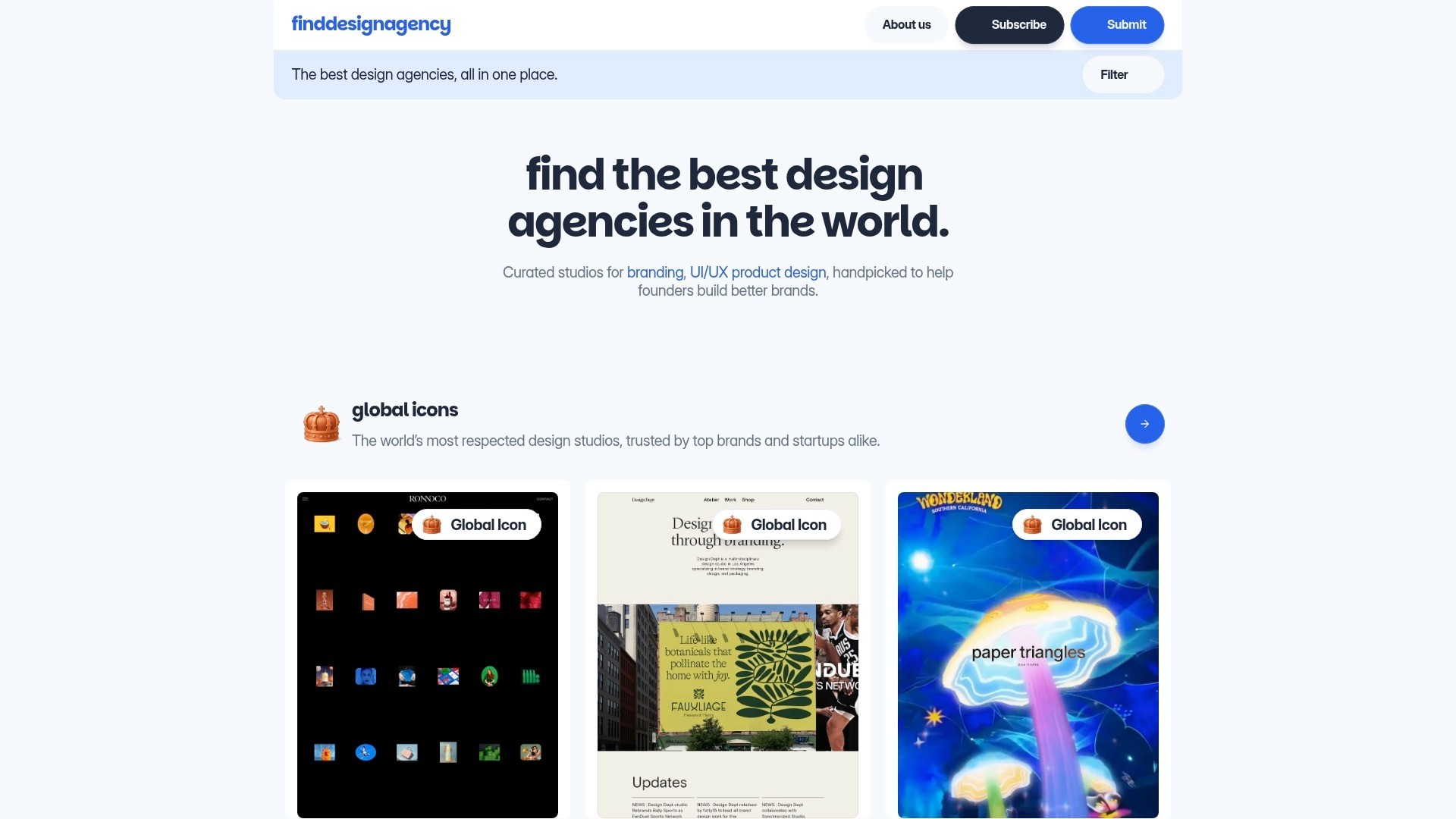
Find Design Agency is a hand-curated directory of studios vetted for exactly this kind of process discipline, not just polished portfolios. Every studio listed is reviewed for strategic depth, and you can filter by specialization, including motion graphics and branding, to find a partner built for the kind of project you're running. Start your search on Find Design Agency and ask every agency you're considering to walk you through their version of these five steps before you sign anything.
FAQ
What is the first step in mastering the creative direction process?
Defining your project vision and objectives comes first. Gather your core stakeholders and craft a one- to three-sentence vision statement that articulates the project's purpose and desired outcome before any design work begins.
What should a strong creative brief include?
A creative brief should cover project objectives, target audience, specific deliverables, timeline, and the key metrics you'll use to judge success. It becomes the shared reference point for the entire engagement.
How do I know if a creative team is exploring enough visual directions?
Ask to see the concepts that didn't get chosen, not just the winning one. A team that can explain why it ruled out other strong directions is thinking strategically, not just producing a single guess.
What does good feedback look like during the execution phase?
Effective feedback names the specific design element, explains the impact, and suggests a concrete fix. It should feel like a candid, respectful exchange rather than a judgment, on both sides of the conversation.
How should I evaluate a finished creative project?
Compare the final deliverables against your original vision statement and brief, using both hard metrics and honest feedback from actual users. Document what worked and what you'd change, so your next project starts from a stronger baseline.
Recommended

More articles you might find useful
Load More


Load More