2D Animation vs 3D Animation: What's the Actual Difference
2D and 3D animation aren't just visually different. Here's how they compare on production, cost, revisions, and reusability, and which fits your project.
📆
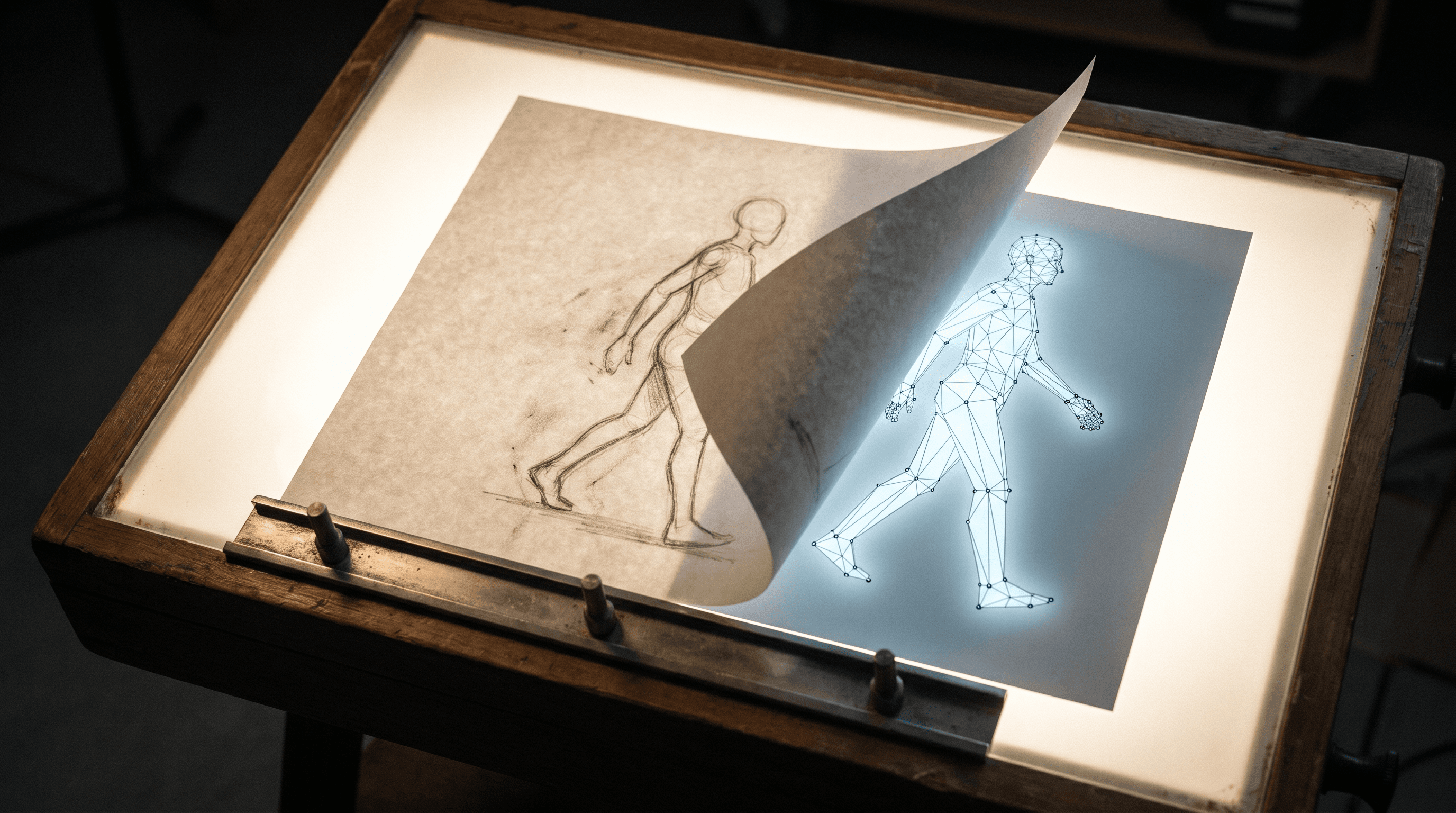
The choice between 2D and 3D animation isn't really about which one looks better. Both can look incredible when done well. Both can look pretty rough when done cheaply. The real question is which one fits what you're actually trying to communicate, and most people asking the question don't yet have the framework to answer it.
Here's the honest distinction: when each one is the right hire, and roughly what each costs so you can plan without surprises.
What 2D Animation Actually Is
2D animation is anything drawn or built to move in a flat plane. Height and width, no depth. That's the technical bit, and it covers a huge range of styles: hand-drawn cel animation, digital frame-by-frame work, rigged character puppets, and motion graphics with animated typography and infographics.
Most commercial 2D work today falls into three buckets:
Frame-by-frame animation. Every frame drawn individually, either traditionally or digitally in tools like Toon Boom Harmony or TVPaint. Labor-intensive, expensive, and produces the most fluid, expressive movement you can get. Think classic Disney work, indie shorts, high-craft brand storytelling.
Cut-out and rigged character animation. Characters built from separate layers (body, arms, head, features) and manipulated like digital puppets. Software fills in the in-between frames, which makes it faster and cheaper. Most commercial explainer videos use this approach.
Motion graphics. Animated typography, icons, charts, data visualizations. No characters, usually no narrative. Fast, clean, information-forward. What most SaaS explainers actually are.
What 3D Animation Actually Is
3D animation builds objects and characters as digital models with depth and volume, then animates them in a virtual space with lighting, cameras, and physics. The workflow is closer to filmmaking than illustration. You're building a scene, not drawing frames.
Common software: Maya, Blender, Cinema 4D, Houdini. The output ranges from photorealistic (car commercials, live-action VFX) to stylized (Pixar-style features, series like Arcane) to game-ready character work.
Three common buckets on the commercial side:
Product visualization. 3D models of physical products, animated to show features and materials in ways photography can't. Common for tech, consumer electronics, automotive, industrial gear.
Character animation. Rigged 3D characters used in ads, series, games, and brand storytelling. Higher upfront cost because rigging is complex, but a good rig can be reused across dozens of pieces.
Motion design in 3D. Abstract shape animation, logo reveals with depth and lighting, environments built for brand films or launches. Sits between traditional motion graphics and full animation.
Where They Actually Differ (Beyond How They Look)
The visual difference is the obvious one, so skip past that. The real gaps show up in production.
Production speed. 2D rigged character work moves faster than 3D character work at similar complexity. 3D takes longer because you're building models, rigging them, lighting scenes, and rendering, and each of those is its own separate craft.
Revision cost. Changing a 2D character's expression or pose is often a few hours of work. Changing a 3D character's model or rig once animation has started can mean redoing days of work. Nail the design down before 3D animation begins, seriously.
Reusability. Once a 3D character is built and rigged, it's cheap to reuse across dozens of pieces. Once a 2D character is drawn frame-by-frame, reusing it means redrawing or committing to a rigged version from the start. 3D wins on long-term brand programs. 2D wins on one-offs. CG Spectrum's rundown on 2D vs 3D goes deeper on the workflow trade-offs.
Style flexibility. 2D can look like almost anything: minimalist, illustrated, hand-drawn, cel-shaded. 3D has a narrower range in practice, though Blender's Grease Pencil and modern shading have expanded it. If your brand needs a distinctive illustrated style, 2D is usually the easier path.
When Each Is the Right Choice
Choose 2D if your project is short-form (explainer video, ad, social content), uses characters primarily for communication (not deep story), needs a distinctive illustrated style, or is a one-off piece. 2D is also the safer bet if your budget is under $15,000 for anything with characters.
Choose 3D if you need product visualization, photorealistic content, character animation you plan to reuse across many pieces, immersive environments, or work destined for gaming or XR. 3D also wins for anything where physics (weight, cloth, fluid) is part of the story.
Look for hybrid capability if your project sits in the middle: 2.5D work (2D characters with 3D environments or camera moves), product content that needs both animated packaging shots and lifestyle character scenes, or brand films mixing styles. These pipelines are more complex, and studios that handle both well are rarer.
Getting this wrong isn't fatal, but it's expensive. A 3D studio quoting a simple explainer usually comes back with a bigger budget and longer timeline than you need. A 2D-only studio taking on product visualization often ends up outsourcing the 3D anyway, with all the coordination overhead that adds.
Pricing and Timelines
2D animation. A 60-90 second explainer with rigged characters typically runs $5,000 to $25,000, with 4 to 6 week timelines. Frame-by-frame at a similar length starts around $20,000 and climbs sharply. Motion graphics without characters can come in under $5,000.
3D animation. A minute of stylized 3D character animation starts around $15,000 to $40,000 for basic complexity, with 8- to 16-week timelines. Photo-real product visualization ranges from $5,000 for a single hero shot to $50,000+ for a full campaign. Feature-film quality is a completely different tier.
Ranges are wide because complexity varies wildly. A talking head is cheaper than a full-body character with props. A reused character is cheaper per piece than a one-off. Get quotes on a real brief, not "how much for animation."
What to Ask Before You Hire
Can I see a full recent piece in the format I need? Not a reel. A full piece. 60 seconds of the actual work tells you more than 3 seconds of the best moment from twelve projects.
What software do you build in, and what's your rendering pipeline? For 3D especially, the answer tells you whether they're set up for what you need. Redshift, Octane, Cycles, and Arnold produce different looks and cost different render times.
Who's on my project and what else are they running? Senior pitch, junior delivery is a real pattern. Get names in writing before you sign.
What happens if the direction shifts after a milestone? You want written specifics on revision rounds, scope changes, and what triggers a re-quote.
Finding the Right Studio Without Guessing
Once you know whether 2D or 3D fits your project, Find Design Agency's 2D animation directory and 3D directory list 500+ vetted studios, filterable by past client type, budget, and location. Curated by designers, not aggregators. Skip the "which of these Google results actually delivers?" step and get straight to real conversations.
Running a 2D or 3D animation studio? Get your studio listed on Find Design Agency. Buyers use the directory to shortlist. If your work is strong and your niche is clear, this is where you want to show up. Reviewed on portfolio quality and outcomes, not paid placement.
Quick answers
Is 3D animation always more expensive than 2D? Not always. High-end frame-by-frame 2D can cost more than some 3D work because of the sheer labor per second. The comparison only makes sense at equivalent quality targets.
Which is easier to change once production starts? 2D, generally. Rigged 2D character changes take hours. 3D character changes after animation starts can take days because of how models, rigs, and rendered scenes interlock.
Can one studio do both 2D and 3D well? Some can. Most can't at the same quality level. Ask to see recent work in each discipline separately. If one portfolio is clearly stronger, treat them as specialists in the stronger one.

More articles you might find useful
Load More


Load More